Mechanical Engineering

Home Home Departments Mechanical Engineering

Mechanical Engineering

60
Intake Capacity
DIPLOMA
Program Type
2026
Established
Mechanical Engineering

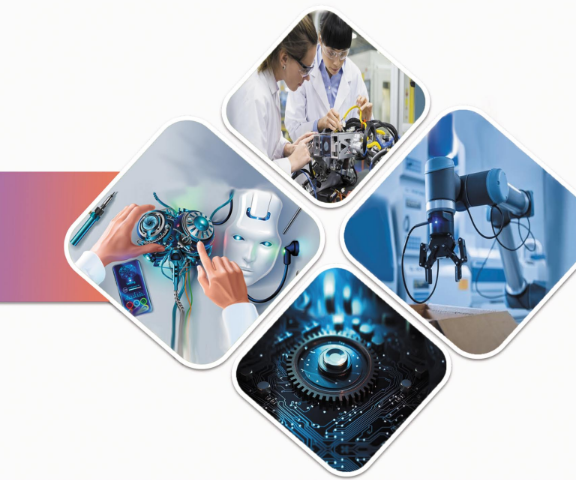
The Department of Mechanical Engineering, established in 2012, is one of the core branches of engineering that deals with the design, analysis, manufacturing, and maintenance of mechanical systems. Since its inception, the department has demonstrated consistent academic growth, with students achieving commendable results in university examinations and technical competitions. The department is committed to providing a balanced blend of strong theoretical foundations and hands-on practical exposure to meet industry demands.
The department regularly organizes industrial visits, expert lectures, seminars, and workshops on emerging areas such as Advanced Manufacturing Techniques, Robotics and Automation, Thermal Engineering Applications, CAD/CAM, and Electric Vehicles. These programs are conducted by industry professionals and experienced faculty members to bridge the gap between classroom learning and industrial practices. The department also promotes research and innovation, encouraging faculty and students to publish research papers, file patents and copyrights and participate in technical events, thereby fostering a culture of continuous learning and technological advancement.
Head of Program

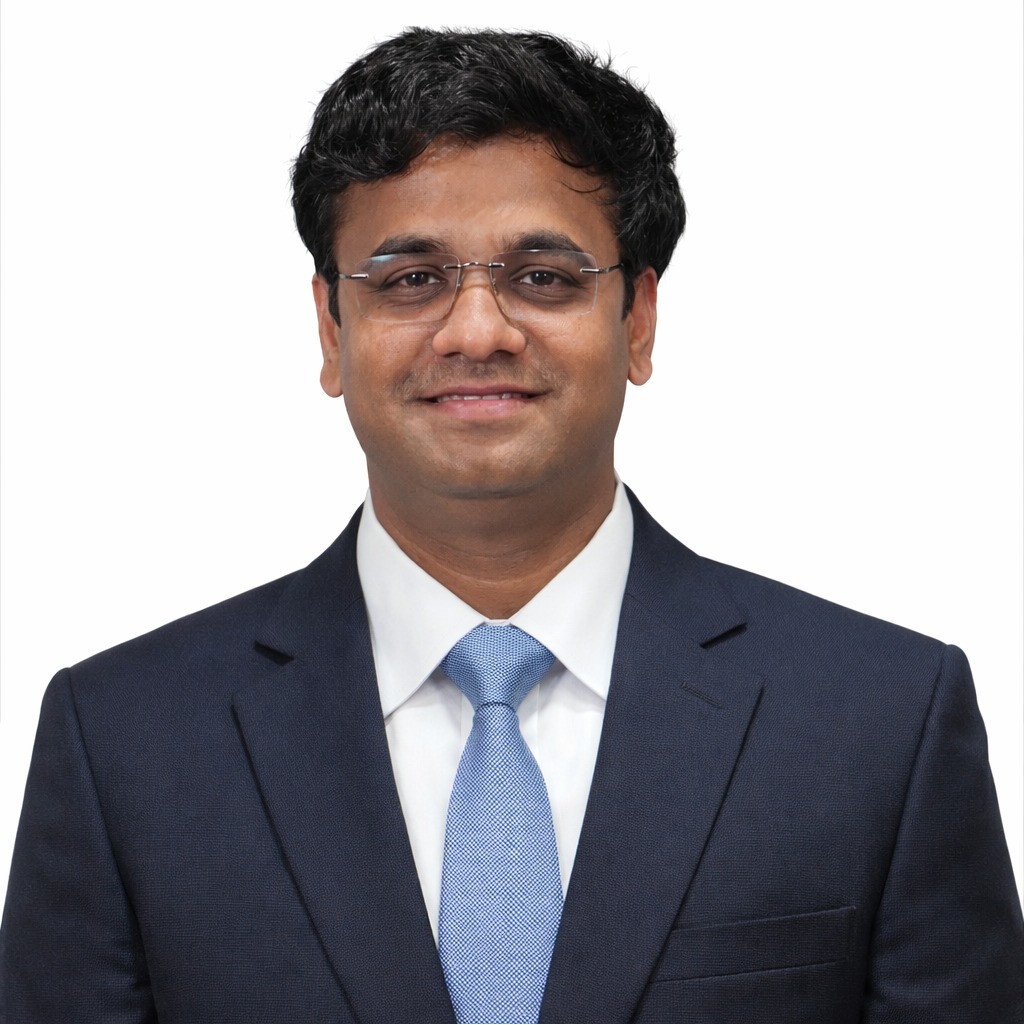
Mr.Onkar V. Patange
Program Head

Mr.Onkar V. Patange

Head of Diploma Programs

B.E (Civil Engineering), M.E (Construction and Management ), MBA-HR

Welcome to the Diploma Engineering Department at SRTTC, Kamshet!
We warmly welcome all students, parents, and visitors to our campus. At SRTTC, we are committed to providing quality technical education, hands-on learning, and a supportive environment that empowers students to build successful engineering careers.

Vision & Mission

Vision

The update is currently under process.

Mission

The update is currently under process.

Objectives

The update is currently under process.

Laboratories

MECHANICAL ENGINEERING MATERIALS (313317)

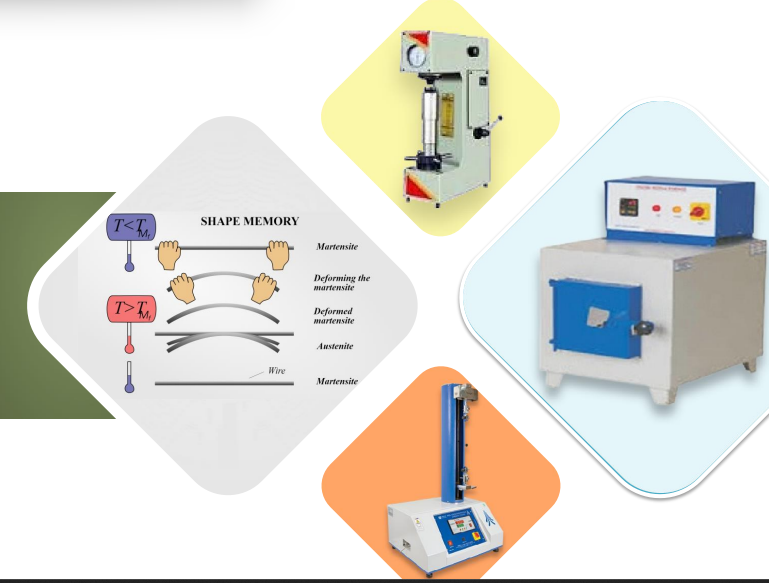
The Mechanical Engineering Materials Laboratory provides practical knowledge of the properties, structure, testing, and applications of engineering materials. Students perform experiments on tensile, compression, hardness, impact, and heat treatment tests while studying material microstructures using metallurgical equipment. The laboratory enhances understanding of material selection, quality evaluation, and the behavior of materials in engineering applications.

Equipment / Lab List
1. Specimen preparation of a given material for microscopic examination
2. Interpretation of microstructure of steels and alloy steels using metallurgical microscope on standard specimens.
3. Hardness testing on Brinell Hardness tester of given sample material.
4. Hardness testing on Rockwell Hardness tester of given sample material.
5. Hardness testing on relevant hardness testers of given untreated and heat treated Mild Steels.
6. Hardness testing on relevant hardness testers of given untreated and heat treated Alloy Steels.
7. Microstructure of cast iron using metallurgical microscope on standard specimens.
8. Hardness testing on relevant hardness testers of given Copper and Brass specimens.
9. Hardness testing on relevant hardness testers of given Aluminium specimens.
10. 10 . Adhesive strength determination of cellophane tape and duct tape using a relevant peel tester
11. Adhesive strength determination of scotch tape, electrical tape and masking tape using relevant peel testers.
12. Identification of different types of plastics using flame tests.
13. Identification of behavior of the shape-memory alloy as a function with regards to temperature using High-temperature oven or electrical current.
14. Comparison of hardness of mild steel using quenching mediums like oil, water & brine in a muffle /box type furnace.
15. Comparison of hardness of alloy steel using quenching mediums like oil, water & brine in a muffle /box type furnace.
16. Comparison of Ancient Indian material development processes with recent processes. (Compare any two)
METROLOGY AND MEASUREMENT (313316)
METROLOGY AND MEASUREMENT  (313316)

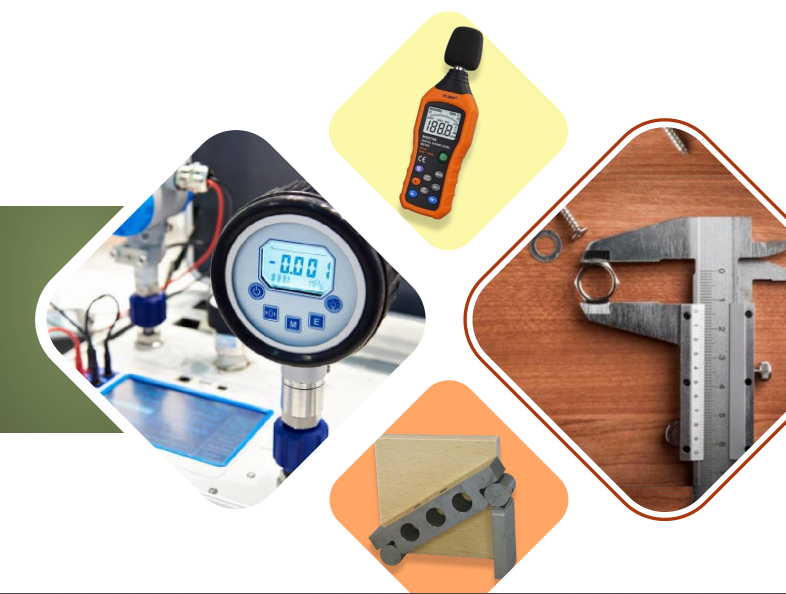
The Metrology and Measurement Laboratory (313316) provides practical knowledge of precision measurement and inspection techniques used in mechanical engineering. Students learn to measure linear, angular, and geometric dimensions using various measuring instruments, understand measurement errors, calibration procedures, and quality control practices, and develop skills for accurate dimensional inspection in manufacturing industries.

Equipment / Lab List
1. Measurement of length and weight by using ancient measurement system
2. Measurement of dimensions of component using vernier caliper, vernier height gauge, vernier depth gauge, micrometer and inside micrometer.
3. Roundness checking of given component using dial indicator / dial gauge.
4. Measurement of unknown angle of a component using Sine bar and verify by using Bevel protractor
5. Measurement of the screw thread elements by using floating carriage micrometer and verification by optical profile projector.
6. Measurement of the gear tooth elements by using gear tooth vernier caliper and verification by optical profile projector.
7. Measurement of the surface roughness of machined surface by using surface roughness tester.
8. Measurement of flatness of given component by using optical flats.
9. Measurement of the unknown angle of a given component by Autocollimator / Angle Dekkor.
10. Measurement of displacement by using Linear Variable Displacement Transducer (LVDT).
11. Measurement of temperature by thermocouple and Verification by thermometer.
12. Measurement of flow rate of liquid by rotameter.
13. Measurement of weight by using a load cell.
14. Sound intensity measurement using Sound meter.
15. Measurement of speed of rotating shaft by stroboscope or inductive pick up.
Fluid Mechanics and Machinery (313309)

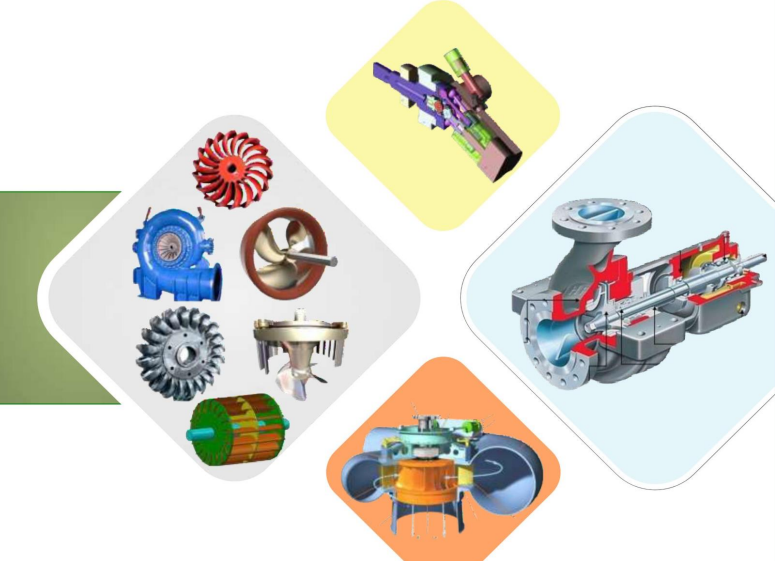
The Fluid Mechanics and Machinery Laboratory (313309) enables students to understand the fundamental principles of fluid flow and the performance of hydraulic machines through practical experiments. Students gain hands-on experience with flow measurement, pressure analysis, pipe flow, pumps, turbines, and hydraulic systems, while developing skills in data analysis, equipment operation, and performance evaluation for engineering applications.

Equipment / Lab List
1. Measurement of water pressure by using Bourdon tube pressure gauge and U-tube Manometer.
2. Measurement of discharge of water by using a measuring tank and stopwatch.
3. Measurement of total energy available at differentsections of a pipe layout to verify Bernoulli’s theorem.
4. Measurement of discharge through pipe using Venturimeter.
5. Measurement of discharge through a pipe provided with sharp edged circular orifice.
6. Measurement of the discharge through pipe using Orificemeter.
7. Interpretation of the type of flow using Reynoldsapparatus.
8. Calculation of Darcy’s friction factor ‘f’ in pipes of different diameters for different discharges.
9.Determination of minor frictional losses in sudden expansion and sudden contraction in a pipe.
10. Determination of minor frictional losses in elbow and bend in a pipe.
11.Determination of the force exerted and work done by a jet on flat plate.
12. Determination of overall efficiency of Pelton turbine using Pelton wheel test rig.
13.Dismantling and Assembly of a Centrifugal pump.
14.Determination of overall efficiency of Centrifugal pump using Centrifugal pump test rig.
15. Dismantling and Assembly of a Reciprocating pump.
16. Determination of overall efficiency and percentage slip of Reciprocating pump using Reciprocating pump test rig.
THERMAL ENGINEERING (313310)
THERMAL ENGINEERING  (313310)

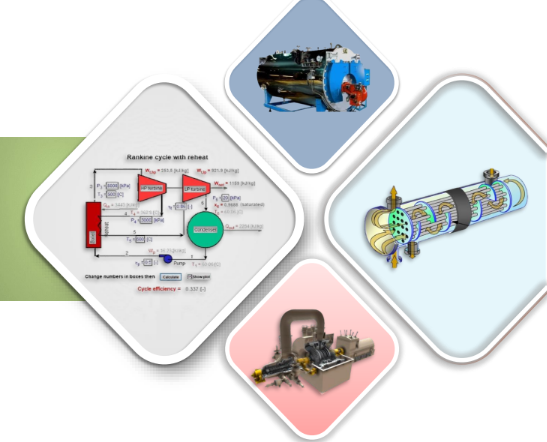
The Thermal Engineering Laboratory (313310) provides practical knowledge of heat transfer, thermodynamics, boilers, internal combustion engines, refrigeration, and air conditioning systems. It enables students to perform experiments, analyze the performance of thermal systems, and understand energy conversion principles while developing practical and analytical skills.

Equipment / Lab List
1. Use thermometer, pressure gauge, rotameter, energy meter to measure temperature, pressure, discharge, and energy
2. Measurement of discharge of air using an air box.
3. Trace the path of flue gases and water steam circuit with the help of a Fire Tube boiler - Cochran Boiler
4. Trace the path of flue gases and water steam circuit with the help of Water Tube boiler - Babcock & Wilcox Boiler.
5. Demonstration & working of Boiler Mountings
6. Demonstration & working of Boiler Accessories
7. Demonstration & working of Impulse & Reaction steam turbine.
8. Demonstration & working of condensers a. Water-cooled condensers. b. Air-cooled condensers.
9. Observe simulation of Thermal Power Plant and write specifications of boilers, turbines, condensers, and electrical generators.
10. Illustrate the methods of compounding used in steam turbines.
11. Conduct a trial on conduction setup of metallic rod and calculate thermal conductivity
12. Conduct a trial on Stefan Boltzmann setup and calculate Stefan Boltzmann constant.
13. Identify different equipment’s in laboratory having heat exchangers and classify heat exchangers. Write construction and working of heat exchangers.
14. Assembling and dismantling of single cylinder I.C Engine.
15. Identify different components of multicylinder I.C. Engine and write function of each component.
Basics of Mechatronic (314017)

The Basics of Mechatronics Laboratory provides hands-on experience in integrating mechanical, electrical, electronic, and control systems. Students perform experiments on sensors, actuators, PLC programming, microcontrollers, electro-pneumatic and electro-hydraulic systems, and basic automation to develop practical skills in designing and controlling mechatronic systems.

Equipment / Lab List
1. Identification of Sensors, actuators available in the laboratory
2. Identification of PLC and microcontroller available in the laboratory
3. Development of Ladder diagram and program PLC for simple application using sensor and actuator
4. Verification of Logic gate functions for the given Ladder diagram by using PLC
5. Development of Ladder diagram and program PLC for two-way switch logic for staircase lighting
6. Development of Ladder diagram and program PLC for Timers and Counters
7. Development of Ladder diagram and program PLC for water level control
8. Development of Ladder diagram and program PLC for pedestrian light (green/red) toggle control
9. Development of Ladder diagram and program PLC for on/off temperature control
10. Development of Ladder diagram and program PLC for lift/ elevator control
11. Development of Ladder diagram and program PLC for single acting/double acting pneumatic system
12. Development of Ladder diagram and program PLC for single acting/double acting hydraulic system
13. Development of Ladder diagram and program PLC for door open and close application
14. Development of Ladder diagram and program PLC for material rejection system
15. Development of 8051 microcontroller program for stepper motor control
16. Development of 8051 microcontroller program for relay interfacing

Faculty Members

M
Mrs.Gauri Vishal Salagare
Lecturer
B.E (Computer Engg.) & M.E (IT Pursuing ) 3 Year exp. salagaregauri02@gmail.com
Download Resume
Mrs.Siddhi Sudhir Satkar
Lecturer
M.E (CSE ,Pursuing ) B.E ( Artificial Intelligence & Data Science ) 1 Year exp. siddhi.satkar@srttc.ac.in
Download Resume
Mrs. Poonam Pravin Thorat
Lecturer
B.E (Civil engineering) 1 Year exp. poonam.thorat@srttc.ac.in
Download Resume

Activities

Department activities will be updated soon.

No downloads available yet.